Independent Testing You Can Actually Trust.
Know exactly what's in your air and on your surfaces. Our personal testing and inspections give you clear, lab-backed answers — before and after any treatment.
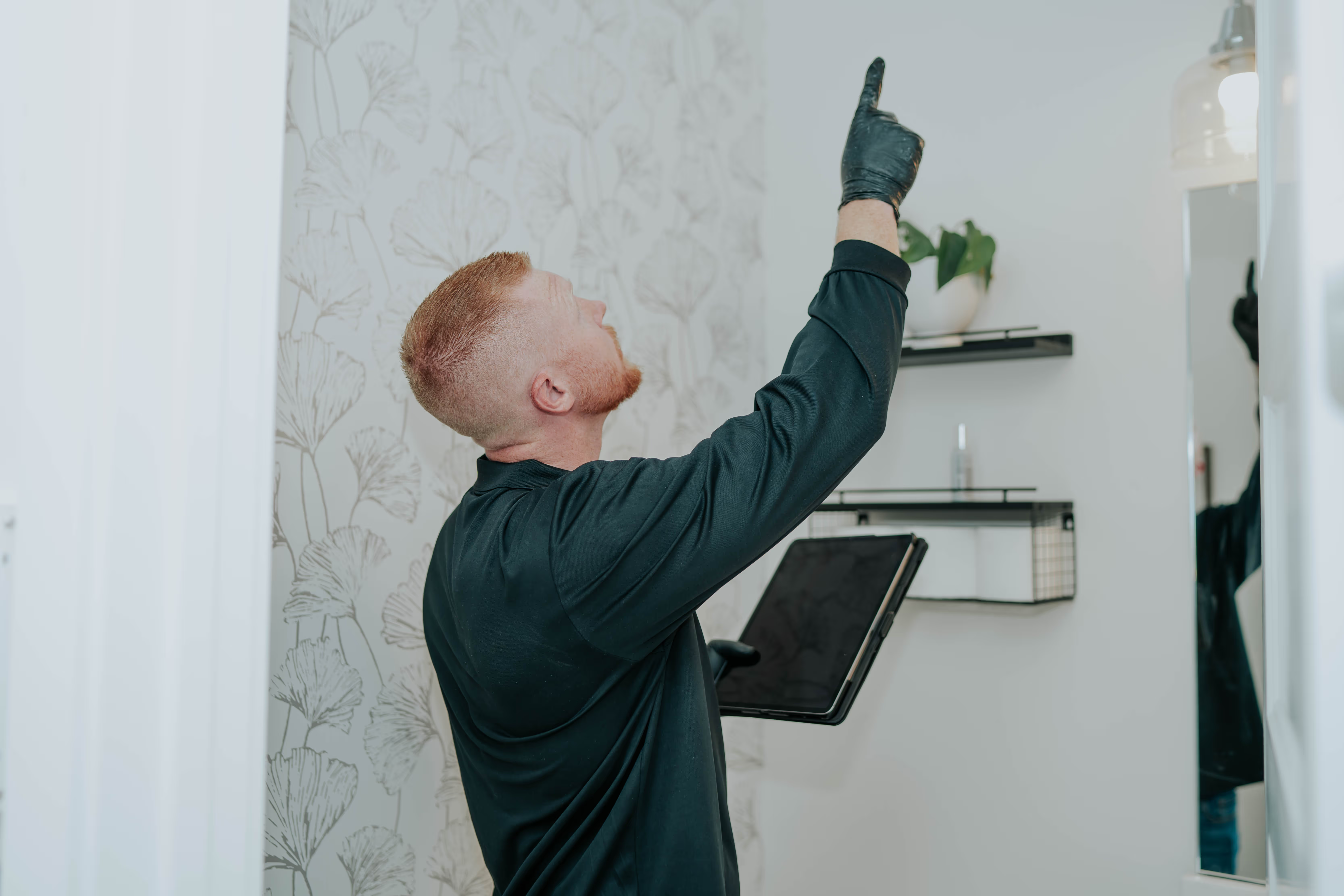
A Complete, Documented Assessment.
Every visit follows the same proven, transparent process.
Full walkthrough
A specialist inspects the property, checks HVAC condition, and identifies moisture sources and problem areas.
Air & surface samples
We collect samples using specialized equipment and send them to an accredited third-party lab for analysis.
Clear written report
You get a plain-English report with spore counts, genus mapping, and recommended next steps.
The Right Test for Your Situation.
The test we recommend typically depends on your objectives, budget, and use-case. Here's what each one tells you.
Non-Viable Testing
Captures mold spores — alive or dead — in an air sample. Identifies the genera present and calculates a spore count per cubic meter to gauge scale and health risk.
Viable Testing
Also captures spores in an air trap, but cultures them on a growth medium so living spores reproduce and the species can be identified.
mVOC Testing
Analyzes airborne contaminants and by-products of indoor mold growth (mVOCs) alongside other common indoor pollutants, indicating overall air quality.
qPCR Testing
A DNA-based method (MSQPCR) applied to a dust sample. Identifies mold DNA and calculates a ratio of water-damage species to common indoor species.
Swab Testing
A sterile swab collects samples directly from a surface suspected of mold growth, pinpointing species and contamination levels to guide remediation.
ERMI Testing
DNA-based analysis of settled dust identifies 36 mold species and produces an Environmental Relative Moldiness Index score against a national database.
Decisions Backed by Data.
Non-viable mold testing takes an air sample from your home and sends it to a third-party accredited lab. It tells you how severe a known mold problem is, or whether hidden mold is present at all.

What Your Report Tells You.
Spore Count
Shows how many mold spores are present per cubic meter of air, giving you a clear sense of severity.
Genus Mapping
Identifies which mold strains are present, helping you and your technician understand the problem in detail.
Diagnosing the Root Cause.
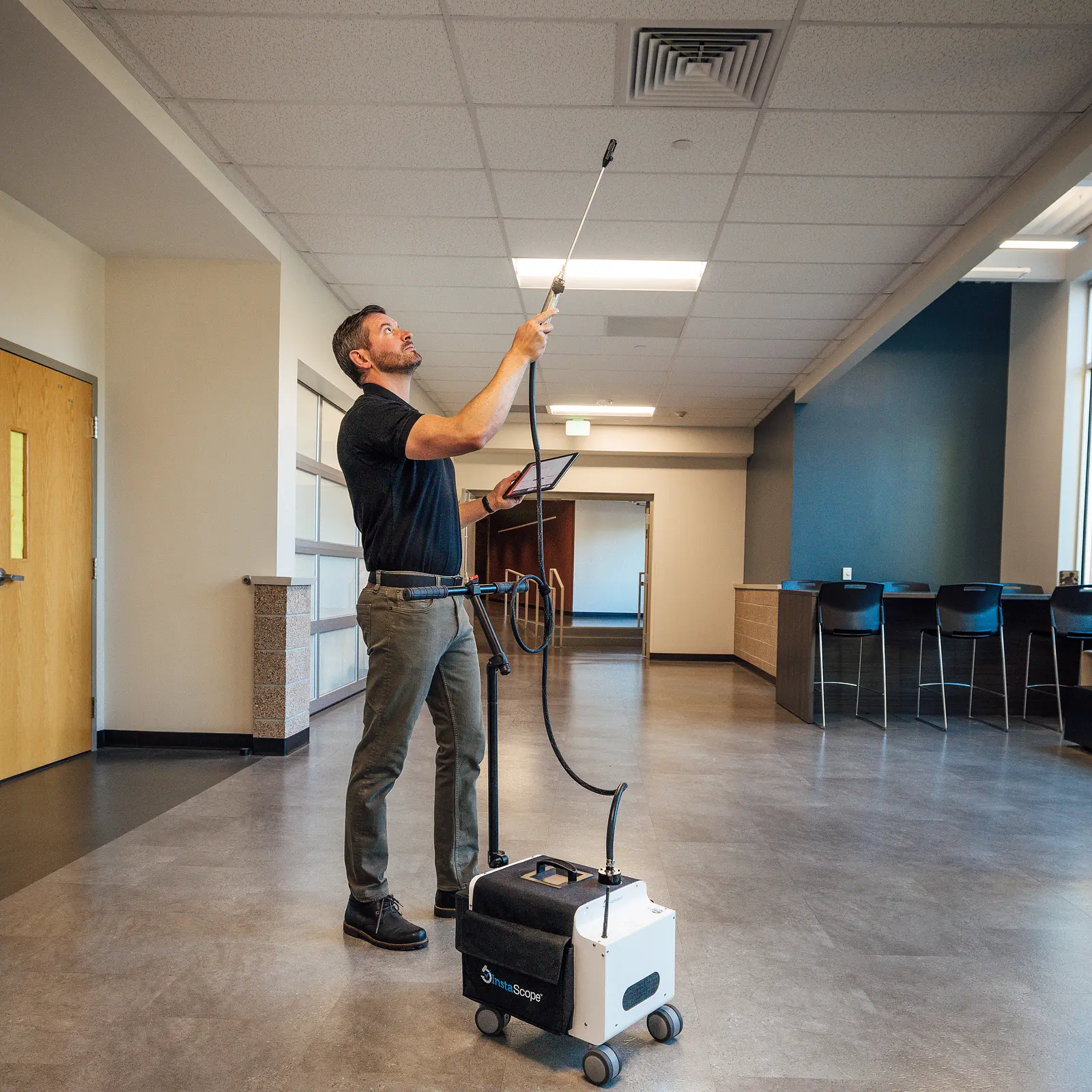
Our technicians inspect your property using a range of specialized tools and experience to diagnose the likely cause of a mold problem — not just the mold itself.
Specialized equipment
Moisture meters, thermal imaging cameras, a borescope, hygrometer, and a Zefon air sampling pump help us thoroughly assess your property.
Complimentary evaluation
We send qualified technicians to assess mold issues in your home or building, completely free of charge, unless you're outside our normal service area.
Real Kansas Customer Stories.
A short customer story from a homeowner who worked with Pure Maintenance of Kansas — part of the same collection of video reviews shared across our services.
Questions About Testing & Inspections.
Which mold test is right for me?
What's the difference between viable and non-viable testing?
How long does it take to get results?
Is the inspection really free?
What tools do you use during an inspection?
Is testing necessary before remediation?
From the Info Hub.
Mold Testing Methods
A breakdown of the different ways mold can be tested and why the "best" method depends on the situation.
Read the article EducationClues That Matter as Much as Test Results
Why a visual inspection and moisture history can tell you as much as an air quality test alone.
Read the article EducationTop 10 Places Mold Might Be Hiding
The most common spots mold grows unseen — and why a thorough inspection covers all of them.
Read the articleWant to Know What's in Your Air?
Schedule an inspection and get clear, lab-backed answers.